
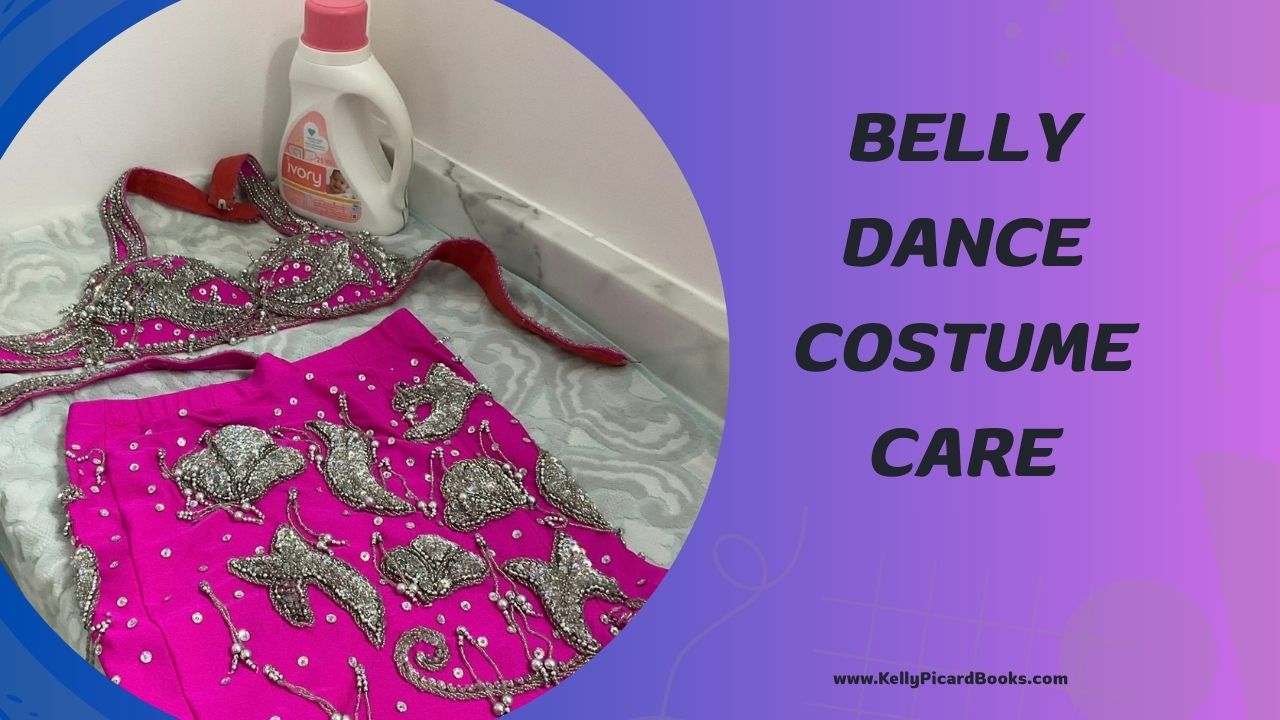
Introduction: Belly dance costumes are expensive, even bought second hand. They are often made from speciality fabrics and embellished with crystals, rhinestones and sequins, all of which need gentle care. You may have workout wear and simple pieces that can go through the washing machine, but most of your costumes will need hand washing. Repairing your costumes promptly and storing them carefully will serve to greatly extend the life of your costumes and their beauty. This will also keep their resale value higher, if you ever decide to sell any.
CLEAN:
Hand Washing Your Costumes: Do a spot test first to make sure that the dye won’t run. You can wash your costume in the bathtub, a sink or even a dish pan/bucket, which is what I do. Use cool water to avoid the dye running and to prevent shrinkage. Add a few drops of liquid soap designed for hand washing fabrics like Woolite or baby laundry detergent like Ivory Snow for its gentleness. You can also use a mild dishwashing soap or baby shampoo. Put the water and soap in first and swirl your hand around to dissolve the soap. Put the costume in and swish it around gently for a few minutes. Drain and refill with clean water, swish, rinse and repeat a few times to get all the soap out. Remove your costume from the water and roll up the bra and belt or the belt and skirt combination in clean, dry towels. Gently blot to absorb excess water. Do not wring or twist your costume as that may damage the fabric. Then lay your costume on a flat surface on a dry towel to air dry. It could take a few days to dry. You can hang up light pieces. Your costume must be completely dry before storing to prevent mold and odors. Do not leave your costume in direct sunlight as that will eventually fade the fabric, beads and sequins.
Stain Removal: Stains happen. It could be makeup, candle wax, smoke, food, etc. Prompt treatment is key to prevent it setting, even if only rinsed in cool water. But you could carry a small Tide to go pen in your performance bag as well. Test first in a small spot to make sure your colour won’t be affected by the stain remover. Spray or rub directly on the stain and let it sit according to the directions. Then, hand wash. If the stain hasn’t been completely removed, repeat the process. A home-made option is some rubbing alcohol on a cotton ball or a Q-tip and rub gently on the area and then rinse.
Bonus Tips: 1. Line your bra and your belts with cotton fabric (thin pads) to absorb sweat and odors. Then change them when they are worn and dirty to help keep your costume cleaner and fresher. 2. Keep your costume clean by wearing a cover-up before and after performing to protect it from accidental spills and snags. 3. Toothpaste and a toothbrush can be used to clean rhinestones and crystals on costumes and accessories.
STORE:
Heavier embellished costumes are better stored laying flat to preserve threads on beaded fringe, prevent stretching and embellishments getting caught on other pieces. I like to use clear shoe boxes for bra and belt and bra and skirt costumes for visibility. I store the costumes with all their matching accessories and sometimes specific jewellery that I wear with that costume. Spandex garments are better stored flat as well in drawers or boxes so they don’t stretch out. Silk veils can be hung over a nonslip hanger like velvet so they don’t fall on the floor. Circle skirts or items that are cut on the bias will last longer stored flat. The hemline will stretch out overtime, if hung up. But lighter pieces can be hung up, like lighter skirts, pants, tops, dresses and veils. I like multi-hangers for skirts, pants and veils to save on closet space.
Organization: It is really helpful to have a storage system that works for you and your space. Try different things and allow your storage system to evolve overtime. Ideas: you could store by function: grouping costumes separately from practice wear and accessories. Or you could store by style with tribal costumes separate from oriental costumes. You could store them by type with full costumes separate from pieces like pants, skirts, tops etc. I also recommend keeping a written in inventory of what you have and notes of any repairs or alterations needed before wearing that costume.
To Absorb Moisture: Add a desiccant to your costume bag or box. Save the little silica packages that you find in shoe boxes, purses, food and vitamin containers. They are also really cheap to buy. A natural desiccant is dry uncooked rice which you could put in a small breathable bag or pouch.
Odors: To eliminate odours like smoke and sweat, you could fill a little fabric bag with cornstarch or baking soda. You could also use cedar wood balls or lavender sachets for freshening up your drawers or your costume. This doesn’t eliminate the need for washing costumes, but it could reduce how often and you may have some pieces that can not easily be washed.
Moths: Protect your costumes from moths by adding cedarwood which comes in various shapes or lavender scented sachets to your costume bags, boxes and drawers or hang them in your closet. (Cedarwood comes in rings you can put on your hangers.)
REPAIR:
Before and after each performance, inspect your costume for needed repairs. Check for loose fasteners, loose or missing beads, rhinestones and fringe. Also look for snagged or damaged fabric. Make your repairs before you put your costume away so that later when you pull the costume from the closet, it’ll be ready to go. Look over your props and accessories too.
Make a general repair kit for your costumes: include safety pins, elastics, scissors, needles, thread that matches your costume, hook & eye sets, measuring tape, fabric glue or clear nail polish (to prevent threads from breaking), fabric cleaning wipes, deodorant and double-sided tape. Spare jewelry is useful too if something breaks at a performance.
Make a mini repair kit for each costume as well and store it with that costume: needle with matching thread, extra matching beads, rhinestones, coins and any needed extra matching costume decorations.
Preserving rhinestones and decorations: With prong settings: keep crystals in place by applying dry clear fabric glue for stones. Make sure that the prongs are flat and holding the stone in place. Periodically, check that no stones are missing or loose. Check the sewing threads on appliques and decorations for broken or weak threads. Check for missing fringe, beads and sequins. Replace with extras from your repair kit. You can protect the finish of your larger rhinestones and crystals with a clear craft sealer or clear nail polish which is what I use. Test your product first on a smaller stone.
CONCLUSION: Protect your costumes and investment by taking care of them. Keeping them clean, stored well and repaired as needed will have them looking better and lasting longer. Knowing how to care for your costumes will keep them and you looking like your best belly dancer self.





Leave a Reply